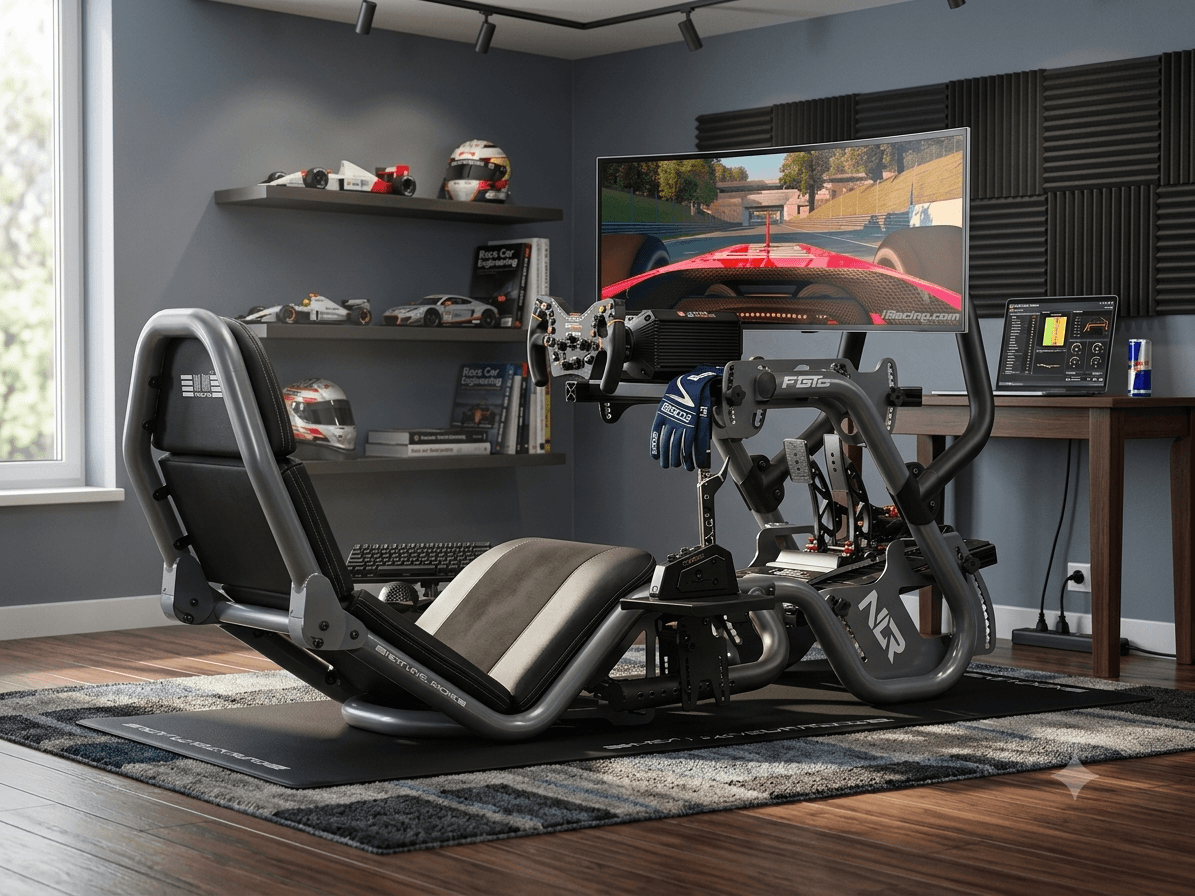
A basic racing simulator can be had for under $2,000, and plenty of casual racers are happy with that. But if you're reading this, you're probably not asking about basic. You're asking what it actually costs to build something that feels more realistic, holds up to hundreds of hours of use, and doesn't leave you wishing you'd spent another $2,000 six months later.
For that buyer, the honest number is $8,000 to $25,000, and the sweet spot for most serious enthusiasts and competitive racers sits closer to $10,000 to $15,000. That range buys a direct-drive wheelbase with real torque, load-cell or hydraulic pedals, a chassis stiff enough to disappear under you, and a display setup that actually shows you what's happening at the limit. Push toward the top of the range and you're adding motion.
Below is a full breakdown of every cost component at this level, three real build examples, and the shipping, tax, and tariff math that most buyers don't find out about until the invoice lands.
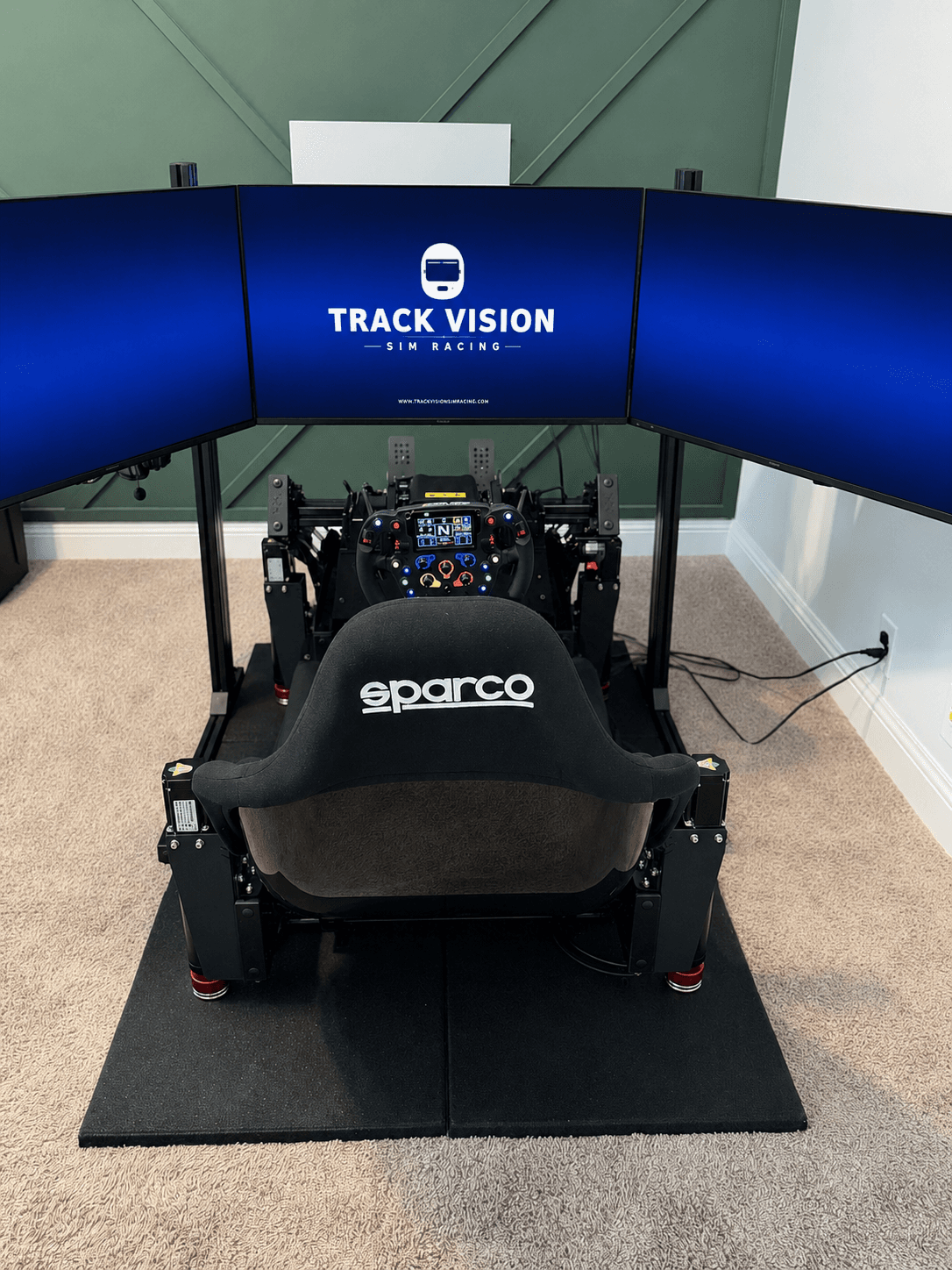
Quick Answer: What Serious Sim Racers Actually Spend
Entry
Enthusiasts stepping up from entry gear — load-cell pedals, single high-torque wheelbase, triple monitors.
Competition
League racers — hydraulic pedals, premium chassis, VR or 4K triples.
Elite / Motion
Motion platforms, top-tier everything — content creators and dedicated competitors.
Complete Cost Breakdown by Component
1. Wheelbase and Steering Wheel ($700–$3,500)
The wheelbase is what most people notice first, but it's worth being honest about why. It's not the strength. It's the detail. A good direct-drive unit lets you feel curb strikes, weight transfer, and the exact moment the rear tires let go, and at this budget tier, direct drive isn't optional. It's the baseline.
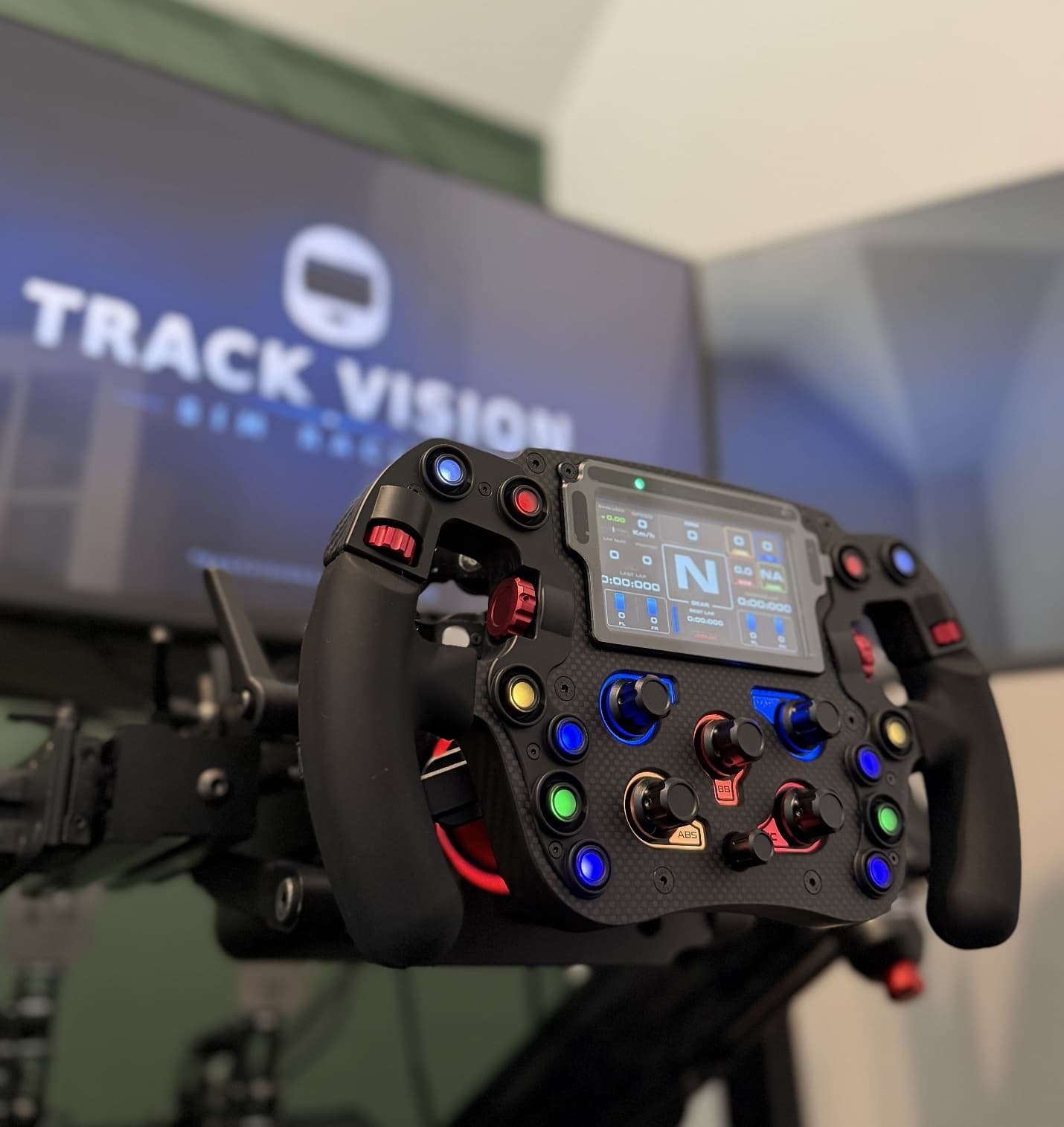
Wheels and rims add another $400 to $1,500 or more for formula or GT wheels with integrated displays, magnetic shifters, and load-cell clutch paddles.
| Category | Price Range | Examples |
|---|---|---|
| Mid-range direct drive | $700–$1,200 | Fanatec ClubSport DD (12Nm), Moza R12, Simagic Alpha Mini |
| High-end direct drive | $1,200–$2,500 | Simagic Alpha EVO, Moza R21 (21Nm), Simucube 2 Sport (17Nm) |
| Ultra / pro-level | $2,500–$3,500+ | Simucube 2 Ultimate (32Nm), Simagic Alpha EVO Pro |
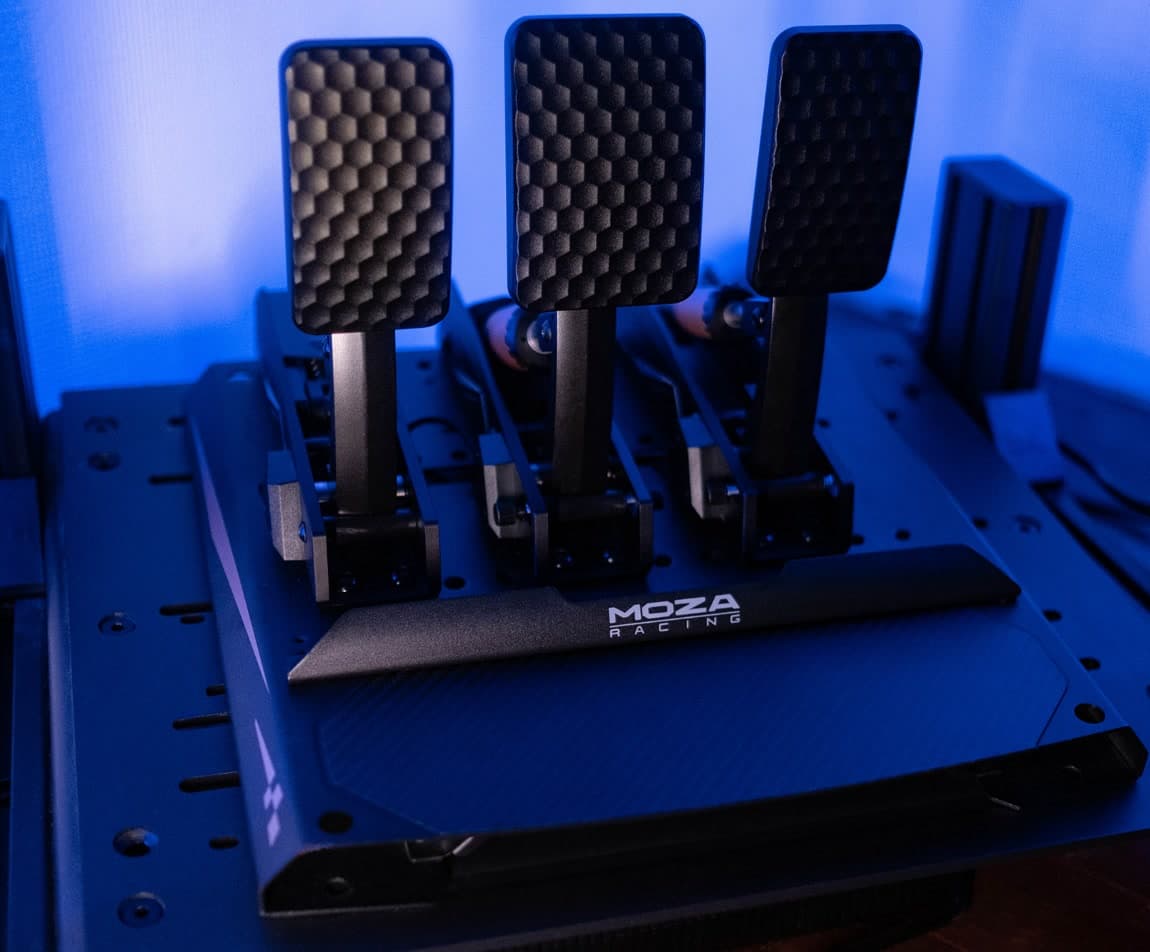
2. Pedals ($350–$6,000+)
Pedals matter more than most buyers expect. A wheel tells you what the car is doing. But the pedals tell you how close you are to losing it, and that's where lap time actually is typically found for intermediate to advanced drivers.
Note: Active pedals are also on the scene now, providing superior adjustability and pedal feel. However, you could get an entire entry-level rig for the price of a single pair of these.
| Category | Price Range | Examples |
|---|---|---|
| Load-cell standard | $350–$650 | Fanatec CSL Pedals LC, Moza CRP, Heusinkveld Sim Pedals Sprint |
| Hydraulic / competition | $650–$1,100 | Heusinkveld Sim Pedals Pro, Simagic P2000 |
| Ultimate / pro tier | $1,100–$1,500+ | Heusinkveld Sim Pedals Ultimate+ |
| Active pedals (per set) | $3,000–$6,000+ | Simucube ActivePedal, Asetek Invicta, Cube Controls |
3. Cockpit, Rig, and Seat ($800–$4,000)
A weak stand flexes under direct-drive torque, and once it does, everything you paid for in the wheelbase gets lost in vibration and slop. This is the component people underspend on most often, and it shows.
| Category | Price Range | Examples |
|---|---|---|
| Aluminum profile cockpit | $800–$1,500 | Sim-Lab GT1 Evo, ASR 3 |
| Premium formula / GT chassis | $1,500–$2,800 | ASR 4, ASR Pro, Sim-Lab P1-X Pro |
| Racing bucket seats | $300–$1,000+ | Sparco, Corbeau FX1 Wide, Sim-Lab Speed 1 XXL, Sabelt |
4. Display or VR ($900–$3,500+)
Field of view changes how you drive. Triple monitors give you peripheral awareness for judging apex distance and side-by-side racing. VR gives you depth perception that a flat screen can't fake, at the cost of some clarity and comfort over long sessions.
| Setup | Price Range | Notes |
|---|---|---|
| Triple 1440p monitors | $900–$1,500 | Strong FOV boost, moderate GPU load |
| Triple 32–43" 4K monitors | $1,800–$2,800 | Best clarity, heaviest GPU demand |
| Premium VR | $1,500–$2,200+ | Pimax Crystal, Varjo Aero |
5. PC ($2,200–$5,500+)
Triple 4K and high-refresh VR are unforgiving. Undersize the PC and every other upgrade on the rig gets capped by frame rate.
DDR5 pricing has climbed through 2026, with 32GB kits now running $180 to $220 versus roughly $100 a year earlier. That alone has pushed PC budgets up across every tier.
| Tier | Price Range | Specs |
|---|---|---|
| Mid (triple 1440p / VR) | $2,200–$3,000 | RTX 5070 Ti / 5080, Ryzen 7 7800X3D, 32GB DDR5 |
| High-end (triple 4K / premium VR) | $3,500–$5,500+ | RTX 5080 / 5090, Ryzen 9 9800X3D, 64GB DDR5 |
6. Accessories ($250–$1,200)
| Accessory | Price Range |
|---|---|
| Sequential shifter | $150–$270 |
| Handbrake | $150–$250 |
| Button box | $150–$260 |
| Monitor mounts / stands | $150–$300 |
| Bass shakers / haptics | $150–$350 |
7. Motion Platforms ($3,500–$20,000+)
Below $15,000, motion is usually the first thing cut to make budget work. Above that line, it's often the whole point of the build. A motion platform doesn't just move the seat, it tells your body about weight transfer before your eyes catch up, which changes how you brake and how you feel a car rotate.
| Type | Price Range | Examples |
|---|---|---|
| 2DOF seat mover | $3,500 | Next Level Racing Motion Platform V3 |
| 3DOF full rig | $6,000–$11,000 | Vero Motion Champion 3DOF, D-Box 4250i |
| 6DOF platform | $11,000–$20,000 | Qubic System QS-220, Vero Motion 6DOF |
Three Real Builds at Three Budgets
These are representative configurations, not exact quotes. Actual pricing depends on brand mix, current component availability, and install complexity.
Entry Build
- Fanatec ClubSport DD (12Nm) + formula wheel$1,500
- Heusinkveld Sim Pedals Sprint (load-cell)$600
- Sim-Lab GT1 Evo cockpit + Sparco bucket seat$1,450
- Triple 27" 1440p monitors$1,200
- PC, RTX 5070 Ti / Ryzen 7 7800X3D$2,850
- Shifter, handbrake, and monitor mounts$600
- Subtotal before assembly and delivery~$8,200
Competition Build
- Simagic Alpha EVO + GT wheel$2,200
- Heusinkveld Sim Pedals Pro (hydraulic)$850
- ASR 4 chassis + Corbeau bucket seat$2,500
- Triple 32" 4K monitors$2,400
- PC, RTX 5080 / Ryzen 9 9800X3D$3,700
- Shifter, handbrake, mounts$600
- Subtotal before assembly and delivery~$12,250
Elite Motion Build
- Simucube 2 Pro (25Nm) + formula wheel$3,000
- Heusinkveld Sim Pedals Ultimate+$1,300
- ASR Pro chassis + Sim-Lab Speed 1 XXL seat$2,900
- Triple 32" 4K monitors$2,400
- 6DOF motion platform$13,000
- PC, RTX 5090 / Ryzen 9 9800X3D, 64GB$4,200
- Full accessory set$600
- Subtotal before assembly and delivery~$27,400
Opt for a higher-end 6DOF platform or a 32Nm wheelbase and this build clears $30,000 without much trouble.
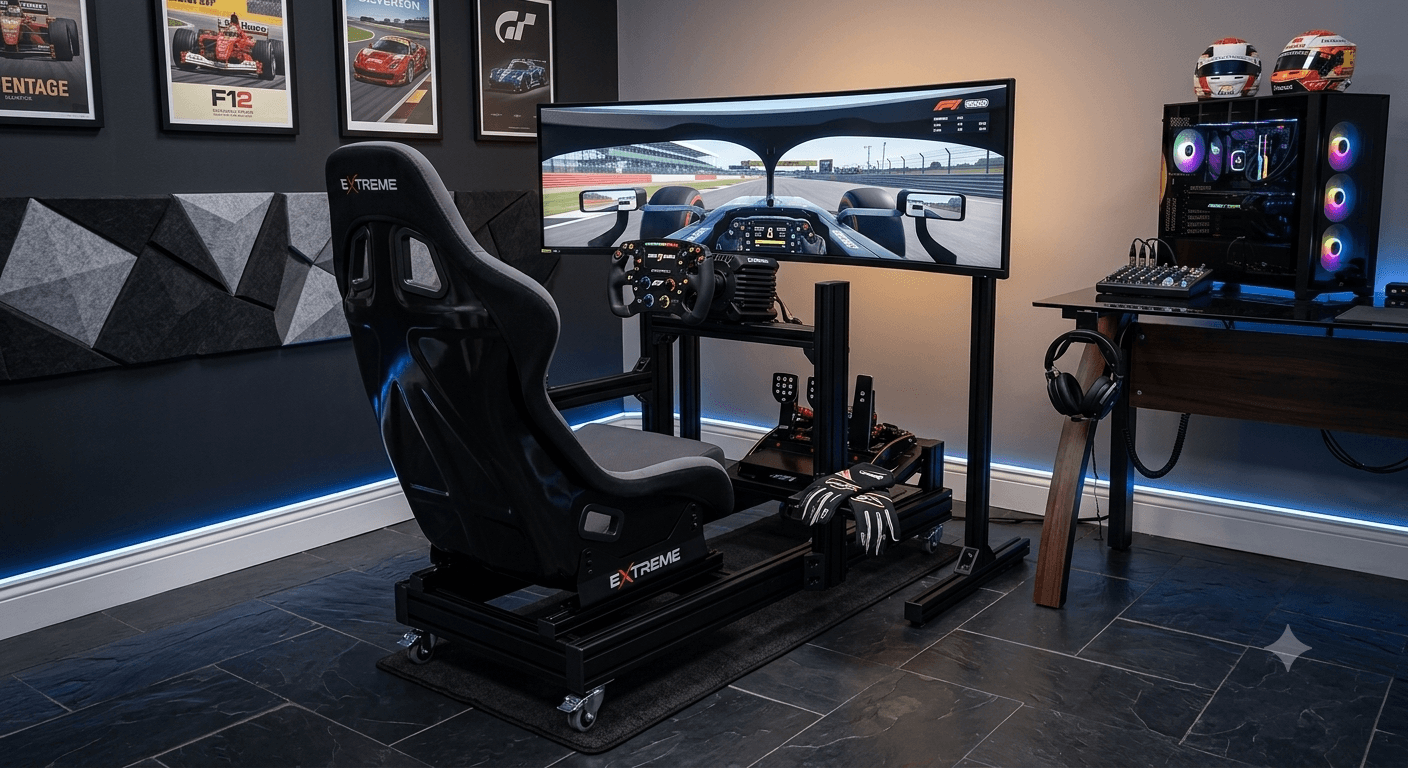
The Hidden Costs of Building It Yourself
Buying components separately saves money on paper. It also introduces costs most people don't budget for.
A basic cockpit takes 8 to 12 hours to assemble correctly. Add a motion platform or triple monitors and you're looking at 15 to 20+ hours, which is a full weekend or two before you've driven a single lap.
Mixing brands, say a Simagic wheelbase with an ASR chassis and a Heusinkveld pedal set, sometimes means custom adapters or 3D-printed brackets. Mounting hardware isn't universal, and screw patterns don't always line up between manufacturers.
Routing USB, power, and pedal cables cleanly through a DIY cockpit without a rat's nest behind it is a genuinely tedious job. Professional builds route cables through the frame during assembly. DIY builds usually mean hours of zip ties after the fact.
Force feedback profiles, pedal curves, and motion tuning take real trial and error to get right. Plenty of builders spend days chasing a setting that feels off before they find it.
If something fails on a DIY rig, you're dealing with whichever manufacturer made that part, on their timeline, in their support queue. A turnkey build carries one warranty for the whole system.
Why Buy From Track Vision Instead of Building It Yourself
Track Vision Sim Racing builds and installs custom simulators for customers across Texas and beyond, out of Mansfield in the DFW area. Every rig is assembled, cable-managed, and tested before it leaves the shop, then delivered and installed in person.
- Plug and play. Rigs arrive built, wired, and calibrated. You're driving the same day, not the same weekend.
- One warranty, one point of contact. Instead of five manufacturers' warranties, there's one team that stands behind the whole build.
- Professional cable management. No exposed wiring, no zip-tie hell.
- Ergonomics done right the first time. Seat position, pedal angle, and wheel height are set up correctly from delivery, not adjusted through trial and error over a few weeks.
- White-glove delivery and in-home installation. The rig is set up in your space, not left at your door in boxes.
- A modular, upgrade-ready platform. Adding a handbrake or a motion platform later doesn't mean tearing the rig apart.
None of that makes a turnkey build automatically cheaper than sourcing every part yourself at retail. What it buys is certainty: a known total cost, a working rig on day one, and someone to call if something needs adjusting.
What About Shipping, Taxes, and Tariffs?
DIY math almost always falls apart once you start the build. There are always things you don't think about until you're in too deep to turn back. Let us do it for you, and the price you pay is final.
Shipping: the part most buyers forget to budget
Aluminum cockpits are heavy and awkward to ship, and most of the major brands manufacture overseas.
Wheelbases and pedals from Fanatec, Moza, and Simagic typically add $50 to $180 in shipping on their own, and a full motion platform can add $200 to $1,000 depending on whether it ships parcel or palletized freight.
| Manufacturer | Shipping to USA | Notes |
|---|---|---|
| Sim-Lab (Finland) | $200–$350 | Full rig plus seat and pedal sliders |
| Next Level Racing (Latvia) | $150–$300 | Motion platforms often ship freight due to weight |
| US-based | $0–$100 | Often free above a minimum order |
Sales tax: what you'll pay in the US
Sales tax applies whether you're buying components piecemeal or a full package, and at this budget it adds up fast. Most US buyers land somewhere between 6% and 10% in combined state and local sales tax, though a handful of states charge none at all.
| Region | Typical Combined Rate | Tax on a $13,000 Build |
|---|---|---|
| No-sales-tax states (OR, NH, MT, DE, AK) | 0% | $0 |
| Lower-tax states | 4–6% | $520–$780 |
| Most states | 6–8% | $780–$1,040 |
| Higher-tax metros (CA, IL, TX metros) | 8–10% | $1,040–$1,300 |
Tariffs and import fees
Buying from overseas manufacturers can also mean import duties on arrival. Aluminum extrusion products have faced tariffs reaching well into triple digits as a percentage depending on current trade policy, and electronics from China typically carry duties in the 0% to 25% range. These fees aren't fixed, they shift with trade policy, so treat any specific tariff number as a moving target and check current rates before assuming a landed cost.
Real Total Cost: DIY vs. Turnkey
These numbers are illustrative, meant to show the shape of the comparison rather than an exact quote for any specific build.
| Cost Component | Entry | Competition | Elite |
|---|---|---|---|
| DIY components | $7,000 | $11,000 | $22,000 |
| DIY shipping | $300 | $500 | $900 |
| DIY tariffs (variable) | $0–$400 | $0–$700 | $0–$1,600 |
| DIY tax (8.25%) | $602–$635 | $949–$1,007 | $1,889–$2,021 |
| DIY total | $7,900–$8,335 | $12,450–$13,210 | $24,790–$26,520 |
| Track Vision package | The Racer$9,250 | The Competitor$15,232 | The Champion$28,649 |
Sourcing every part yourself at retail will usually come in a little lower on paper. A Track Vision package costs more than the sum of its boxes, and we're upfront about that. What the difference buys is everything that doesn't show up in a parts list: a fully assembled, tuned, and tested rig, one warranty for the whole system, and white-glove delivery and installation in your space, instead of a weekend (or three) of your own time and a stack of boxes with five separate support queues.
Which Tier Should You Buy?
Entry
Goal: step up from entry-level gear into real direct-drive feel and load-cell braking.
Recommended: mid-range direct-drive wheelbase, load-cell pedals, aluminum cockpit, triple 1440p monitors.
Competition
Goal: league racing, consistent lap times, a rig built for serious practice hours.
Recommended: high-torque direct drive, hydraulic pedals, premium chassis, triple 4K or VR.
Elite / Motion
Goal: maximum immersion, motion feedback, a rig built to be raced hard for years.
Recommended: top-tier wheelbase, ultimate-spec pedals, motion platform, triple 4K displays.
Final Verdict: Buy vs. Build
If you enjoy the process of building and troubleshooting hardware, DIY is a legitimate path and the cost difference may not be dramatic. If you'd rather spend your first weekend racing instead of assembling, a turnkey build closes that gap for you.
| Factor | DIY Build | Turnkey |
|---|---|---|
| Time investment | 10–30+ hours | Delivered and installed |
| Compatibility risk | Real, especially mixing brands | Pre-tested before delivery |
| Warranty | Multiple, fragmented | Single, whole-system |
| Cable management | On you | Handled during assembly |
| Ergonomics | Trial and error | Set up correctly on install |
| Upgrade path | Often requires rework | Built to be modular |
Want to get a custom build curated to your driving?
Get a Custom Quote →Frequently Asked Questions
How much does a good racing simulator cost?
For a serious build, plan on $8,000 to $10,000 at the entry level, $10,000 to $20,000 for a competition rig, and $20,000 or more once you add a motion platform and top-tier hardware.
What's the actual difference between an $8K and a $15K rig?
Mostly pedal quality, wheelbase torque, and display resolution. The $15K build also has room for VR or 4K triples without the PC becoming a bottleneck.
Do I need a motion platform?
No. Plenty of $10,000 to $20,000 builds skip motion entirely and put that money into the wheelbase and pedals instead. Motion becomes the priority once those two are already dialed in, and it is what typically pushes a build past $20,000.
How long does professional installation take?
A single visit, typically under a few hours, compared to a full weekend or multiple weekends or more for a DIY build of the same spec.
Can I upgrade a turnkey rig later?
Yes, a properly built modular sim will have good upgrade paths built-in. Adding a handbrake, a bigger wheelbase, or a motion platform later shouldn’t require rebuilding the rig from scratch.